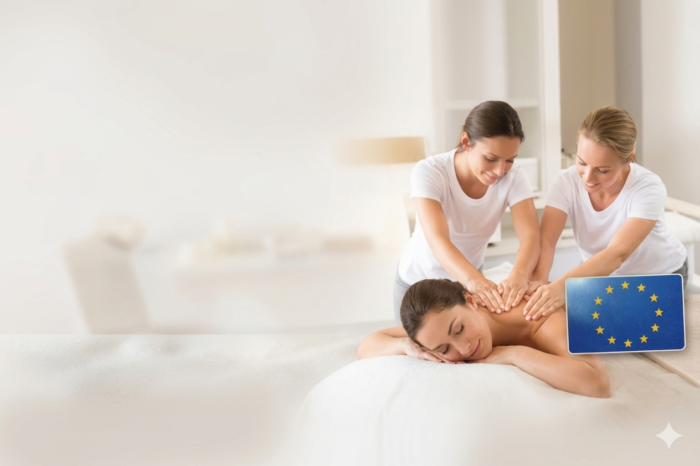
The Traditional Asian massage techniques They bring together a set of age-old practices aimed at harmonising the body, energy, and spirit. They combine specific movements, pressures, stretches and sometimes the use of natural tools to offer global well-being. Each technique has its own philosophy and objectives: relaxation, energetic rebalancing or revitalisation.
At Infini Beauté, we offer professional training in all these techniques, accessible remotely or in our Centre in Hauts-de-France.
In this article, we help you understand the Differences between Asian massages, in order to better choose a treatment or a Asian massage training tailored to your objectives.
What Is an Asian Massage? Discover Traditional Wellness and Energy Practices
One Asian massage is a treatment technique inspired by traditional Asian medicines (Chinese, Indian, Japanese, Thai, Tibetan…). It is based on the circulation of vital energy (Qi, Prana, Sen…) through the body, by using pressures, stretches, vibrations, heat or natural tools.
Asian massage aims to:
- Release energetic blockages
- Relieve physical tension
- Soothe the mind
- Restore global balance
Traditional Energetic Massage Techniques from Asia and Their Holistic Benefits
The Asian energetic massages primarily work on the circulation of vital energy. They are often gentle in appearance, but act deeply on inner balance.
Features
- Work on meridians, chakras or energy lines
- Targeted pressure, vibrations or sounds
- Stress, emotions and deep fatigue management
Examples of energetic Asian massages
- Shiatsu Face & Body Massage
- Tibetan Singing Bowl Massage
- Chinese Tuina Back Massage
- Kundalini Massage
- Indian Kansu bowl massage
- Rose Quartz Massage
For whom?
- Stressed or emotionally charged individuals
- Clients seeking mental calm and energetic balance
- Practitioners wishing to offer subtle and differentiating treatments
Traditional Relaxing Asian Massage Techniques for Deep Body and Mind Relaxation
The Relaxing Asian massages They favour muscle relaxation, letting go, and a feeling of overall well-being. They are often carried out with oil, heat, or sensory accessories.
Features
- Fluid and embracing gestures
- Light to moderate muscle work
- Strong sensory dimension
Examples of relaxing Asian massages
- Balinese Massage: Sensory Relaxation, Aromatherapy and Tropical Healing Traditions
- Hot Stone Massage
- Seashell Massage (clams)
- Jade Stone Massage
- Oshibori Hot Towel Massage
- Herbal Pouch Massage
- Javanese Massage
For whom?
- People seeking deep relaxation
- Tired, tense or overworked clients
- Spas and beauty salons wishing to offer pampering treatments
Traditional Tonic and Therapeutic Asian Massage Techniques Explained
The Invigorating or therapeutic Asian massages have a more dynamic effect on the muscles, joints and mobility of the body. They can be deep, structural and very revitalising.
Features
- Deep pressure and stretches
- Joint mobilisations
- Full body workout
Examples of invigorating Asian massages
- Traditional Thai Massage
- Bamboo Massage
- Amma Massage
- Korean Relaxation
- Nepalese Massage
- Vietnamese massage
For whom?
- Sportspeople or active people
- Clients suffering from muscle tension
- Practitioners wishing to offer effective and structured care
Why choose traditional Asian massage techniques?
These massages are not limited to muscle relaxation: they also work on energy circulation and emotional well-being. They can be practised in the salon, in a calming environment, or adapted to domicile for a moment of unique relaxation.
They are particularly recommended for:
- Stressed or tense people
- Sportspeople or active people
- Clients seeking a complete physical, energetic, and emotional treatment
Why choose an Asian massage in a salon or at home
Under eye rejuvenation is one of the most requested aesthetic treatments in international beauty salons and spas. The delicate eye area is prone to showing signs of fatigue, ageing, or dehydration. Asian massage It distinguishes itself from Western approaches through its holistic view of body and mind. It doesn't limit itself to relieving muscular tension: it also works on the energy circulation, mental relaxation and emotional balance. Whether in a salon or at home, an Asian massage offers a complete well-being experience, tailored to each individual.
In the salon, the environment is optimised for relaxation: soft lighting, delicate scents, soothing music, and traditional accessories such as hot stones, Tibetan singing bowls or pouches of aromatic herbs. At home, certain techniques can be adapted to offer a unique and accessible moment of relaxation, particularly gentle and energetic massages such as Shiatsu or the Amma massage.
Choosing an Asian massage therefore allows you to benefit from both a Deep physical relaxation, of a energy rebalancing and one Sensory stimulation, whilst respecting the tradition of age-old techniques.
Training in Asian massage: an asset for well-being professionals
Training in Asian Massage Techniques is a strategic advantage for wellness professionals today. These ancestral techniques are increasingly in demand by clients, who are looking not only for muscle relaxation but also for a Energy and emotional rebalancing.
Comprehensive training allows you to master several approaches: Thai massage, Balinese, hot stones, shiatsu or herbal poultice massage, offering a varied range of treatments adapted to the needs of each client. Practitioners can therefore offer personalised, more authentic and differentiating treatments, strengthening customer loyalty.
Furthermore, the possibility of undertaking these training courses remotely or in our Centre in Hauts-de-France offers flexibility and practical learning. Professionals trained in Asian massage techniques can thus enrich their expertise, improve their know-how, and meet the growing demand for treatments combining relaxation, energy, and harmony of body and mind.
Training in Asian massage: an asset for wellness professionals
Training in Asian Massage Techniques is a strategic advantage for wellness professionals today. These ancestral techniques are increasingly in demand by clients, who are looking not only for muscle relaxation but also for a Energy and emotional rebalancing.
Comprehensive training allows you to master several approaches: Thai massage, Balinese, hot stones, shiatsu or herbal poultice massage, offering a varied range of treatments adapted to the needs of each client. Practitioners can therefore offer personalised, more authentic and differentiating treatments, strengthening customer loyalty.
Furthermore, the possibility of undertaking these training courses remotely or in our Centre in Hauts-de-France offers flexibility and practical learning. Professionals trained in Asian massage techniques can thus enrich their expertise, improve their know-how, and meet the growing demand for treatments combining relaxation, energy, and harmony of body and mind.
FAQ - Asian Massages: In-depth
What is the difference between energetic and relaxing massages?
Energetic massages (Shiatsu, Tuina, Kundalini) primarily act on the circulation of vital energy (Qi, Prana, Sen), the meridians and chakras to rebalance the body and mind. Relaxing massages (Balinese, hot stones, Oshibori) focus on muscular relaxation, letting go and a feeling of sensory well-being.
2. Are toning massages suitable for athletes?
Yes. Invigorating massages such as Thai, Bamboo or Nepalese improve blood circulation, release deep tension, mobilise joints and strengthen muscle recovery. They are particularly recommended for athletes and active individuals.
3. Can Asian massages be practised at home?
Certains techniques douces et énergétiques comme le Shiatsu, le massage Amma ou aux pierres de jade peuvent être adaptées à domicile. Les massages plus complexes ou qui nécessitent des outils spécifiques (pierres chaudes, bols tibétains) sont recommandés en institut pour bénéficier d’un environnement optimal de relaxation.
4. What tools are used in Asian massages?
The tools include volcanic hot stones, rose quartz, jade, Tibetan singing bowls, bamboos, aromatherapy pouches or hot towels (Oshibori). Each tool helps to stimulate muscles, activate energy and amplify sensory relaxation.
5. Are Asian massages suitable for all ages?
Yes, with adjustment of pressure and duration. Gentle energetic massages are suitable for children and the elderly. Toning or deep massages are recommended for adults, athletes or people with muscle tension.
6. What are the energetic benefits of Asian massages?
They rebalance the flow of vital energy (Qi, Prana, Sen), release blockages, promote mental relaxation, improve sleep and stimulate emotional well-being. Some massages also target chakras or meridians for overall mind-body balance.
7. Do Asian massages help reduce stress?
Yes. Relaxing and energising techniques act on the nervous system, reduce mental and physical tension, promote a state of calm, and assist with emotional management.
8. How long does a typical session last?
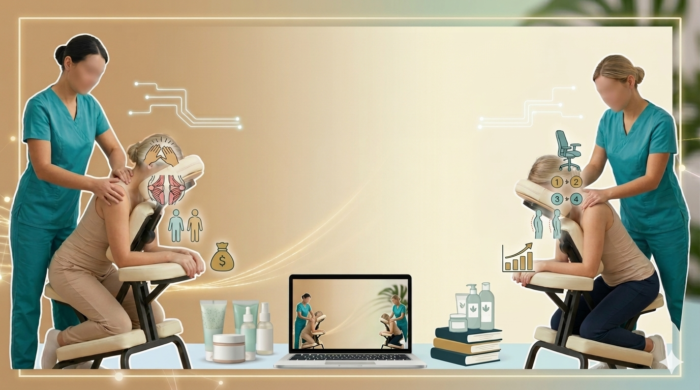
Depending on the type of massage: express massages such as seated Amma – 15 to 30 minutes, relaxing or invigorating massages – 60 to 120 minutes for a complete body and energy treatment.
9. Can several techniques be combined in the same session?
Yes, a trained practitioner can combine energetic, relaxing, and toning massage techniques according to the client's needs. For example, Shiatsu + hot stones for relaxation and energetic harmony, or Thai + Bamboo for muscles and joints.
10. Why train in Asian massage?
The training allows participants to master different techniques (Shiatsu, Balinese, Thai, hot stones, etc.), adapt treatments for each client, and offer a complete mind-body experience. It is an asset for practitioners wishing to offer professional, authentic, and distinctive treatments.
11. Which types of clients benefit the most from these massages?
- Stressed or tired people
- Sportspeople or active people
- Clients seeking energetic and emotional rebalancing
- Spas and beauty salons wanting to enhance their offerings with traditional and authentic treatments.
12. Are these massages recognised internationally?
Yes. Asian massages are practised worldwide and recognised as wellness treatments or complementary therapies, with international terms: Asian Massage, Shiatsu, Thai Massage, Balinese Massage, Hot Stone Therapy, Kansu Facial Massage, Lomi-Lomi.
13. Can these techniques be integrated into a modern spa or salon?
Absolutely. The integration of Asian massages enriches the spa offering, attracts clients seeking authenticity and global well-being, and enhances the practitioner's expertise by offering differentiated and comprehensive treatments.
14. Are Asian massages compatible with other wellness practices?
Yes. They combine perfectly with aromatherapy, reflexology, meditation, yoga or massages from other traditions (Oceanic, African), for a holistic approach to well-being.
15. What is the recommended frequency to fully benefit?
1 to 2 sessions per month for general relaxation and energy harmonisation. For significant tension or sports recovery, 1 session per week may be ideal.
Conclusion
The Traditional Asian massage techniques are available in a wide variety of practices, from subtle energy treatments to relaxing and invigorating massages. Understanding their differences allows for a better choice of treatment, but also for building a coherent and complete professional offering.
Training in Asian Massage Techniques is today a real asset for offering authentic, effective and deeply transformative care.
To deepen your knowledge of the different relaxation and energy techniques:
You can also read: