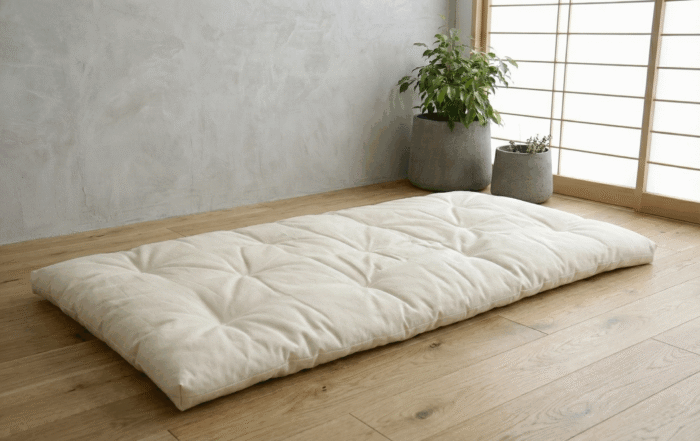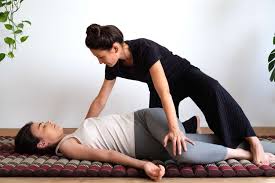
The Floor Futon Massage vs Massage Table is a traditional practice on a floor mattress, offering a different approach to table massage. This technique Allows for the combination of stretching, joint mobilization, and deep pressure. Unlike a table, the practitioner can use their entire body to apply movements, thus offering a more complete and effective relaxation.
In this article, we will explore in detail the differences between futon massage and table massage, their benefits, techniques, and tips for choosing the most suitable method.
Understanding Floor Futon Massage Techniques and Their Professional Benefits
The Futon massage is distinguished by the freedom of movement it offers. The practitioner can move around the receiver, using their hands, forearms, elbows, knees, and even feet. Thus, passive stretching and mobilizations are more complete and effective.
This practice is used in different traditions:
- Thai massage / Thai yoga massage
- Japanese Shiatsu
- Korean relaxation
- Rebozo massage
Consequently, the futon allows for a full-body workout, combining muscle relaxation and energy stimulation.
The Limitations of Traditional Massage Tables for Bodywork Sessions
Although very common, table massage has some limitations:
- Limited freedom of movement: The practitioner remains standing and must adapt their movements to the constraints of the table.
- Muscle fatigue Using only the hands and arms often leads to tension and fatigue, especially during long sessions.
- Restricted stretching certain techniques such as Thai massage stretching are difficult to achieve.
However, the table remains suitable for relaxing oil massages, especially for those seeking only superficial relaxation.
The Benefits of Futon Massage for Clients and Massage Therapists
The futon massage offers several benefits adults
Bodyweight training
The practitioner can use their body weight to apply deep pressure without excessive effort. In addition, This allows you to work on your deep muscles and release accumulated tension.
Integration of stretches
The futon allows for yoga-inspired stretches and Thai massage yoga, improving mobility, flexibility, and muscle relaxation.
Full body workout
This approach works on the entire muscle chains, offering a more complete release than on a table.
Various techniques
Pressures, stretches, oscillations, and joint mobilizations can be combined according to the recipient's needs. Thus, the session becomes personalized and effective.
Thai massage on a futon: a practical example
The Thai massage yoga is a perfect example of the practice on a futon:
- The receiver remains dressed on the mattress.
- The practitioner performs passive stretches and joint mobilizations.
- Pressures follow energy lines (Sen lines).
Benefits:
- flexibility improvement
- deep muscle relaxation
- stress reduction
- Stimulation of blood circulation
Detailed benefits of futon massage by body area
Back and spine
The futon allows for pressure to be applied along the spine and paravertebral muscles. In addition, stretching helps to improve posture and reduce accumulated tension.
Shoulders and neck
The mobilizations and pressures target the neck and shoulders, relieving pain related to stress and prolonged postures.
Legs and hips
Passive stretching helps to relieve tension in the legs and hips, which is particularly beneficial for athletes.
Arms and hands
The practitioner can mobilize the joints and muscles of the arms and hands, improving circulation and flexibility.
Feet and ankles
Pressure and mobilization promote blood circulation and deep relaxation of the feet, which are often neglected in table massages.
International Comparison: Futon vs. Table
In Asia, the futon is the standard for Thai massage and shiatsu. In Europe and America, the table is more common for Western massages.
However, more and more Western practitioners are adopting the futon for:
- incorporate stretching and passive yoga
- offer complete relaxation
- Improve practitioner ergonomics and comfort
How to choose a quality practitioner or futon
Criteria for a massage futon:
- Thickness: 8–12 cm
- length: ~200 cm
- width: ~120 cm
- Stability and comfort guaranteed
Choosing a practitioner:
- Recognized training in Futon Massage or Thai Yoga Massage
- Hands-on experience
- Respect for the recipient's needs
Thus, the combination of a skilled practitioner and appropriate equipment guarantees an effective and enjoyable session.
Massage Futon vs. Table: Comparison Chart
| Aspect | Table massage | Massage futon |
|---|---|---|
| Freedom of movement | Limited | Total |
| Stretches | Restricted | Deep and complete |
| Pressure | Main only | Body weight used |
| Full body workout | Partial | Complete |
| Ergonomics Practitioner | Severe fatigue | Less tension |
| Relaxation | Good | Deep |
Combine table massage and futon massage
Some sessions combine both methods:
- Relaxing oil massage
- Futon: stretches, mobilizations, yoga massage
In addition, this combination offers a personalized experience tailored to each individual's needs.
User reviews and testimonials
“After a futon session, I feel more relaxed than ever. The stretches helped me recover after sports.” – Laura, Paris
“The massage on the table is pleasant, but the futon allows for deep bodywork; I highly recommend it.” – Marc, Lyon
“I discovered futon yoga massage and felt a real improvement in my mobility.” Anna, Brussels
FAQ – Massage Futon vs. Table
Is a futon massage more effective than a table massage?
Yes, in many cases. Futon massage allows for:
- From Full passive stretching inspired by yoga and Thai massage, difficult to perform on a table.
- The use of practitioner body weight, allowing for deep pressure with minimal effort.
- One global mobilization of muscle chains, offering complete body relaxation.
However, for a simple relaxing oil massage, the table remains very suitable, especially for people looking for light and superficial touch.
Q2: Can you learn futon massage even if you're not very flexible?
Yes. The practitioner's flexibility is not an essential condition. The training teaches How to adapt stretches and presses to the recipient's morphology, and how to use body weight to limit effort. Thai yoga massage or Shiatsu techniques on a futon are progressive and adaptable.
Q3: How long should a futon session be for effectiveness?
A full session usually lasts 60 to 90 minutes, sometimes 2 hours for advanced protocols including stretches, mobilizations, and deep pressure. This allows for deep work on the entire body: back, legs, arms, hips, shoulders, and feet.
Is futon massage suitable for pregnant women?
Yes, but with certain precautions:
- Use only gentle and appropriate techniques.
- Avoid direct abdominal pressure.
- Prefer side or back sleeping positions with pillows for comfort.
Specialized training courses (Thai prenatal, prenatal futon massage) detail these adaptations.
Q5: Can futon massage oils be combined?
R: Absolutely. Some schools incorporate the use of oils for Improve glide, relax muscles, and enhance the sensation of relaxation. However, the bulk of futon work relies on Presses, mobilizations and stretches, and not on the glide alone, unlike table massage with oil.
What are the immediate benefits of futon massage?
After a session, clients generally feel:
- Deep relaxation and stress reduction.
- Muscle tension relief accumulated, particularly in the back, shoulders, and legs.
- Improved joint mobility and muscle flexibility.
- Feeling of lightness and overall well-being, through energetic harmonization.
Q7: Massage futon or table for athletes?
R: The futon is recommended for athletes or active people, as it allows for:
- From specific stretches promoting muscle recovery.
- The work of deep joints and muscle chains.
- The release of accumulated tension after exertion.
The table remains suitable for quick and relaxing massages after training or competition.
Is shiatsu a massage or a therapy?
R: Shiatsu is a Japanese traditional therapy using pressure on the meridians to balance the body's energy. It is practiced preferably on a futon, allowing access to deep stretches and pressures.
Q9: What is the practitioner's fatigue?
On the futon, the fatigue is reduced The practitioner uses their body weight rather than just their hands and arms, which reduces muscle tension and allows them to work longer without the risk of injury. The table often leads to greater fatigue in the arms and back, especially during long sessions.
Q10: Massage futon for elderly or mobility-impaired individuals?
R: Yes, but the positions and intensity of the pressure need to be adapted. The training details gentle techniques that respect the receiver's mobility and comfort, while offering effective overall work on the body.
Q11: Can Futon massage be learned remotely?
Yes, training in-person and online are available for:
- Thai massage on a futon
- Shiatsu
- Korean Relaxation
They include detailed videos, complete protocols, and ergonomic tips, allowing for safe practice even without a physical model present.
Q12: Which futon to choose for effective practice?
R: Essential Criteria:
- Thickness: 8–12 cm for comfort and stability
- Length: ~200 cm, Width: ~120 cm
- Firmness adapted to withstand pressure and stretching
- Stable and durable material
A quality futon paired with a trained practitioner guarantees effective and enjoyable sessions.
Q13: Massage futon and CPF: is it financable?
R: Some futon massage or Thai yoga massage training are eligible for the CPF, especially the certifying remote versions. This allows you to follow the training at no charge and highlight your skills to your clients.
Q14: Massage futon or table, how to choose?
R:
- Table Ideal for simple relaxation, oil massages, superficial relaxation.
- Futon Ideal for stretching, joint mobilization, energy work, deep relaxation, and muscle recovery.
For a complete protocol, some practitioners combine both methods.
Conclusion
The Floor Futon Massage vs Massage Table offers deep relaxation and a full-body workout, combining stretches, pressure, and mobilizations.
Compared to the table, it:
- allows for full-body work
- Promote flexibility and mobility
- reduces practitioner fatigue
Click here to read our pillar article
You can also read: